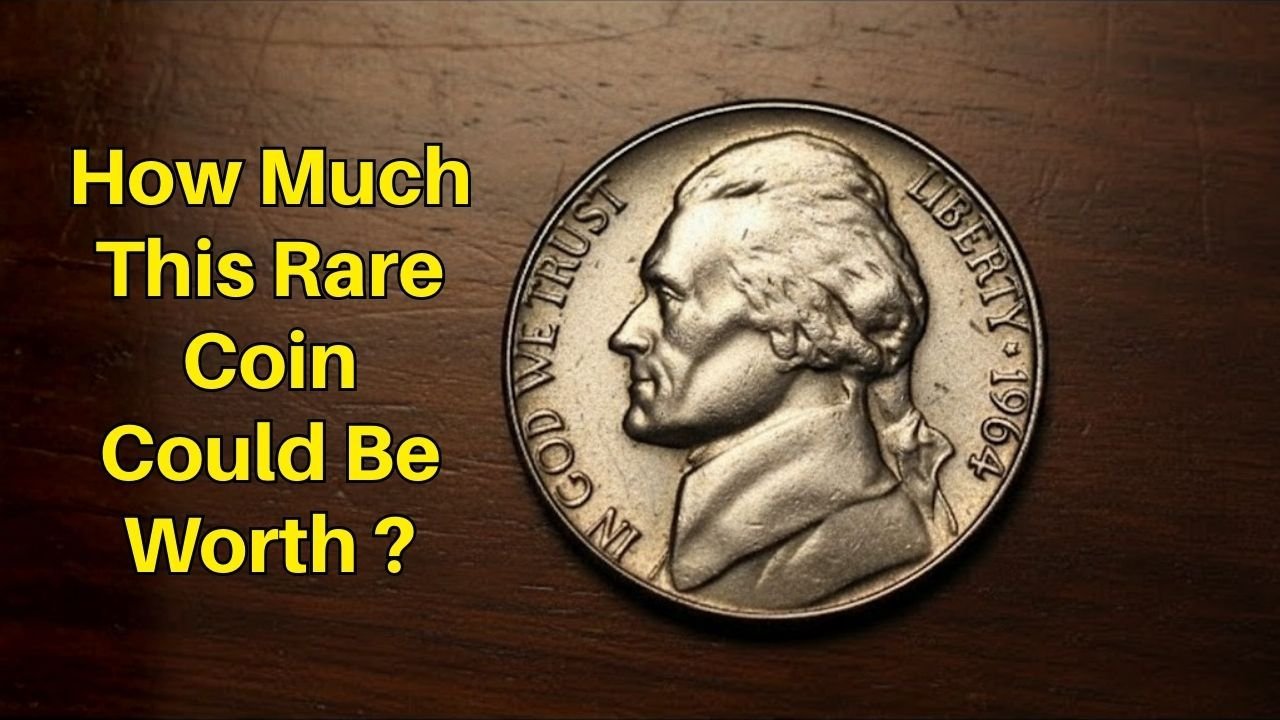
The 1964 Jefferson Nickel is often overlooked as ordinary pocket change, yet it holds a unique place in American numismatics. Struck during a pivotal period of economic stability and transition, this coin represents the final chapter of an era before major changes in U.S. coin production. While most examples remain common, certain varieties, errors, and high-grade specimens from 1964 have become increasingly desirable among collectors, with values far exceeding their five-cent face value.
For collectors who understand what to look for, the 1964 nickel offers a compelling mix of history, accessibility, and hidden upside.
Historical Background of the 1964 Jefferson Nickel
The Jefferson Nickel series was introduced in 1938, replacing the Buffalo Nickel and marking a shift toward more modern coin design. Created by sculptor Felix Schlag, the obverse features Thomas Jefferson, while the reverse showcases Monticello, his historic Virginia estate.
By 1964, this design had been in circulation for over 25 years, familiar to generations of Americans. The year itself is significant because it came just before sweeping changes in U.S. coinage driven by rising metal prices and public hoarding. As a result, 1964 nickels were produced in very large quantities, yet subtle differences in striking quality and minting errors created unexpected rarities within this otherwise common issue.
Design and Composition Details
Obverse and Reverse Characteristics
The obverse of the 1964 nickel displays a left-facing portrait of Jefferson, with strong detail visible in higher-grade examples, particularly in the hair and facial contours. The reverse depicts Monticello with fine architectural lines that are often softened or worn down on circulated coins.
Collectors pay close attention to the clarity of these details, as sharp definition is a key indicator of value.
Metal Composition
Unlike wartime nickels from the early 1940s, the 1964 Jefferson Nickel contains no silver. Its composition is the standard 75 percent copper and 25 percent nickel alloy. While this means it lacks intrinsic precious metal value, its worth is instead driven by condition, rarity, and collector demand.
Mint Marks and Production
The 1964 nickel was produced at three U.S. Mint facilities. Philadelphia issues carry no mint mark, Denver coins are identified by a “D,” and San Francisco struck proof coins marked with an “S.” San Francisco did not produce regular circulation strikes that year, making proof examples the primary focus from that mint.
Because of the exceptionally high overall mintage, mint marks alone do not guarantee rarity. Instead, collectors look for standout quality or unusual characteristics within each mint’s production.
Rare Varieties and Error Coins
Doubled Dies and Strike Errors
Some of the most valuable 1964 nickels are those with clear minting errors. Doubled die obverse or reverse coins show noticeable doubling in lettering or design elements, creating a distinct visual effect that collectors prize. These errors occurred during the die preparation process and were never intended for circulation.
Other desirable errors include off-center strikes, clipped planchets, and improperly prepared blanks. While such errors are rare, they can elevate the value of a 1964 nickel dramatically.
Proof and Cameo Examples
Proof nickels struck in San Francisco are another area of strong collector interest. Coins with deep cameo contrast, where the design elements appear frosted against a mirrored background, are especially sought after. High-grade proof coins with minimal imperfections can command significant premiums.
How Condition Influences Value
Condition is the single most important factor in determining how much a 1964 nickel may be worth. Circulated examples typically show wear on Jefferson’s hair and the steps of Monticello, limiting their value to face amount or slightly above.
Uncirculated Mint State coins, however, are far scarcer than their high mintage numbers suggest. Coins with full detail, strong luster, and minimal surface marks become increasingly valuable as grades rise. Top-tier Mint State examples certified by professional grading services can sell for tens or even hundreds of dollars.
Market Values and Trends
The market for 1964 nickels has shown steady, long-term interest rather than explosive growth. Common circulated coins remain abundant, but demand for high-grade and error examples continues to increase as collectors prioritize quality over quantity.
Certified Mint State coins have seen gradual appreciation, particularly as fewer pristine examples remain available. Error coins and exceptional proofs tend to outperform standard issues, as their rarity is more clearly defined.
The Role of Professional Grading
Professional grading and authentication play a crucial role in establishing value. Coins graded by respected third-party services provide confidence to buyers and sellers alike. A certified grade confirms authenticity, condition, and market credibility, which is especially important for higher-value examples.
For collectors who suspect they may own a rare 1964 nickel, professional grading is often the best next step to determine its true worth.
Finding Value in Everyday Places
One of the enduring appeals of Jefferson Nickel collecting is the possibility of discovery. Valuable 1964 nickels can still surface in old collections, inherited coin jars, or even rolls obtained from banks. While such finds are uncommon, they continue to fuel interest and excitement in the hobby.
This potential encourages collectors to examine coins carefully and learn the distinguishing features that separate ordinary examples from valuable ones.
Cultural and Historical Importance
Beyond market value, the 1964 Jefferson Nickel represents a snapshot of mid-20th-century America. Its design reflects respect for historical leadership, while its production marks the end of a traditional era in U.S. coinage. Collecting these coins fosters an appreciation for craftsmanship, history, and continuity.
Each nickel serves as a small but meaningful connection to the past, blending everyday utility with lasting cultural significance.
Why the 1964 Nickel Still Matters
The 1964 Jefferson Nickel may appear unremarkable at first glance, yet it remains an important and intriguing coin for collectors. Rare varieties, minting errors, and high-grade examples offer genuine value potential, while even common coins carry historical weight.
More than sixty years after its release, the 1964 nickel continues to reward curiosity and careful study. It proves that even the most familiar coins can hold unexpected stories and, in some cases, surprising value for those willing to look closer.