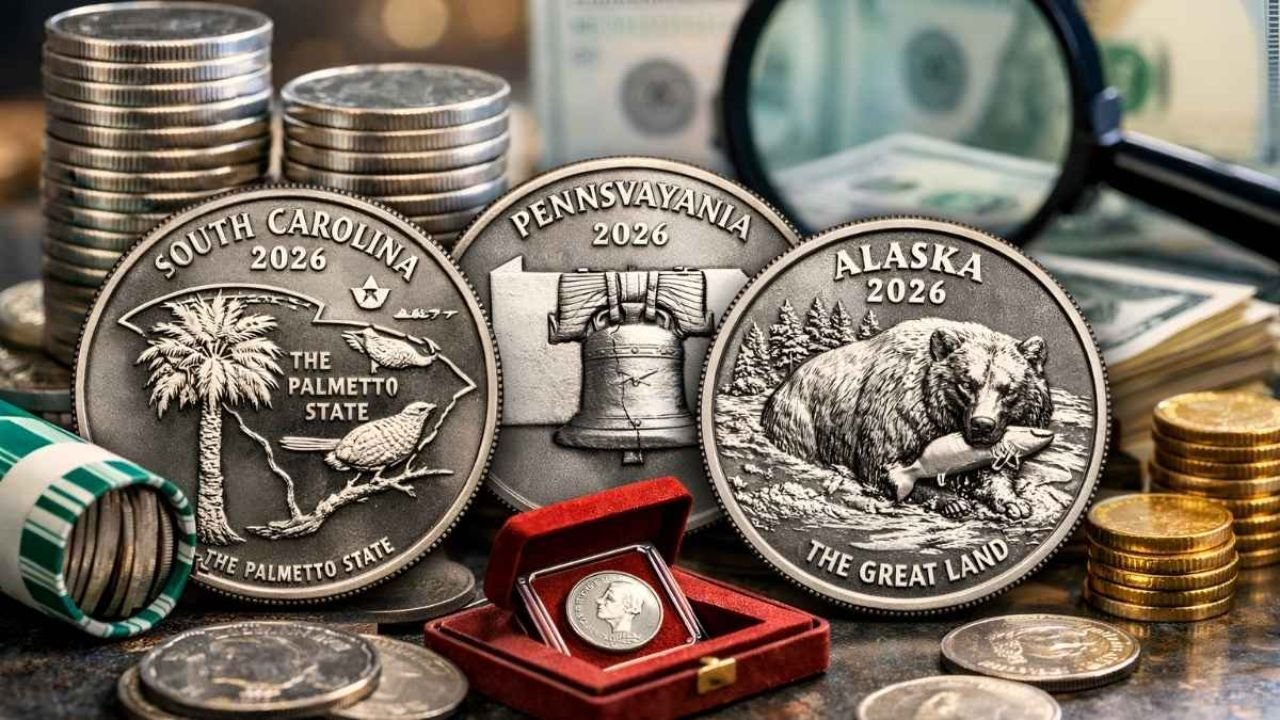
The State Quarters program stands as one of the most successful and influential initiatives ever introduced by the U.S. Mint. Launched in 1999, it transformed ordinary pocket change into a nationwide collecting phenomenon. Each quarter told a story, highlighting the heritage, culture, and identity of a single state. Even though the program officially concluded in 2008, interest has not faded. In 2026, collectors continue to search for rare varieties, pristine conditions, and unusual errors that can elevate a simple 25-cent coin into a valuable collectible worth hundreds of dollars.
This guide explores how State Quarters are valued in 2026, what drives collector demand, and why some examples now command prices well above expectations.
The Origins of the State Quarters Program
The U.S. Mint introduced the State Quarters program to celebrate all 50 states in the order they joined the Union. Each year, five new designs were released, creating anticipation and encouraging the public to actively search for new coins in circulation.
The program achieved immediate success. Millions of Americans began saving quarters, assembling albums, and learning about coin collecting for the first time. Although billions of coins were produced, the massive mintage did not eliminate the possibility of rarity. Over time, condition scarcity, minting errors, and special collector issues created meaningful value within the series.
Design and Artistic Appeal
Every State Quarter features George Washington’s portrait on the obverse, maintaining continuity across the series. The reverse designs, however, are what made the program exceptional.
Storytelling Through Coin Design
Each state selected imagery that reflected its history, achievements, or natural beauty. From iconic landmarks and historical figures to symbols of innovation and wildlife, the designs captured a broad narrative of American identity. In 2026, collectors continue to appreciate the artistic diversity, with certain designs attracting stronger demand due to visual appeal or cultural significance.
Mint Facilities and Production Differences
State Quarters were struck at multiple U.S. Mint locations, and the mint mark plays an important role in determining collectibility.
Philadelphia and Denver Circulation Coins
Philadelphia and Denver produced the majority of State Quarters for everyday use. These coins were struck in enormous quantities and circulated heavily, which is why most examples remain worth face value today.
San Francisco Proof and Silver Issues
San Francisco focused on proof coins and special silver proof versions made specifically for collectors. These coins were struck with greater care and in much smaller quantities, making them far more desirable in 2026. Silver proofs, in particular, stand out for their metal content and superior finish.
Rare Varieties and Mint Errors
Despite high mintages, some State Quarters gained value due to mistakes during production. Errors add uniqueness, turning common designs into standout collectibles.
Most Sought-After Error Types
Collectors actively seek double die varieties, off-center strikes, clipped planchets, and coins struck on the wrong metal. Some quarters also feature unusual mint mark characteristics or striking anomalies that set them apart. In 2026, these errors remain among the strongest drivers of high prices within the series.
2026 State Quarters Value Guide
State Quarter values vary widely depending on condition, rarity, and collector demand. Below is a general pricing overview based on current 2026 market trends:
- Circulated common State Quarters: face value of 25¢
- Uncirculated mint state examples: $1 to $5
- San Francisco proof coins: $5 to $20 depending on grade
- Silver proof State Quarters: $10 to $50 depending on condition
- Double die error varieties: $100 to $500 depending on clarity and grade
- Off-center strike errors: $50 to $300 depending on severity
- Exceptional mint state coins or rare errors: $500 or more
These values represent general market ranges and can fluctuate with auction activity and collector interest.
Collector Demand in 2026
Collector interest in State Quarters remains surprisingly strong. Many enthusiasts aim to complete full 50-state sets in high grades, while others focus exclusively on proofs, silver issues, or errors.
Nostalgia and Accessibility
The emotional connection plays a significant role. Many collectors remember discovering these coins in circulation, which adds nostalgia-driven demand. Because the series is accessible and widely recognized, it continues to attract both new and experienced collectors.
The Role of Grading and Authentication
Professional grading has become essential for valuable State Quarters. Coins graded at high levels such as MS-67, MS-68, or PR-70 often command significant premiums.
Grading provides confidence, consistency, and protection in the marketplace. In 2026, certified coins dominate high-end sales, while ungraded examples struggle to achieve comparable prices, even when rare.
Investment Potential of State Quarters
Although not all State Quarters are investments, select examples have demonstrated strong long-term potential.
Where Value Growth Comes From
Coins with clear rarity drivers tend to perform best. These include silver proofs, top-grade mint state coins, and visually dramatic errors. As tangible assets, they appeal to collectors seeking diversification beyond traditional financial instruments.
In 2026, demand for premium-quality State Quarters remains stable, supported by online auctions, transparent pricing data, and global collector participation.
Auction Activity and Market Trends
Auctions play a central role in shaping values. Record-setting sales often redefine price expectations, especially for rare errors or flawless proof coins.
Online auction platforms have expanded the market, allowing collectors worldwide to compete for top examples. This increased visibility has helped elevate prices for coins that were once overlooked.
Preservation and Long-Term Care
Proper preservation is critical to maintaining value. Coins should be stored in protective holders that prevent scratches, moisture exposure, and environmental damage.
Handling should be minimal, and coins should always be held by the edges. Cleaning is strongly discouraged, as it permanently reduces originality and collector appeal.
Why State Quarters Still Matter
The State Quarters series represents a rare moment when history, art, and everyday life intersected. While most examples remain common, the right combination of condition, rarity, and uniqueness can transform a simple quarter into a prized collectible.
In 2026, State Quarters continue to reward curiosity, patience, and knowledge. For collectors willing to look beyond face value, this iconic series proves that modern coins can still offer meaningful value and lasting appeal.