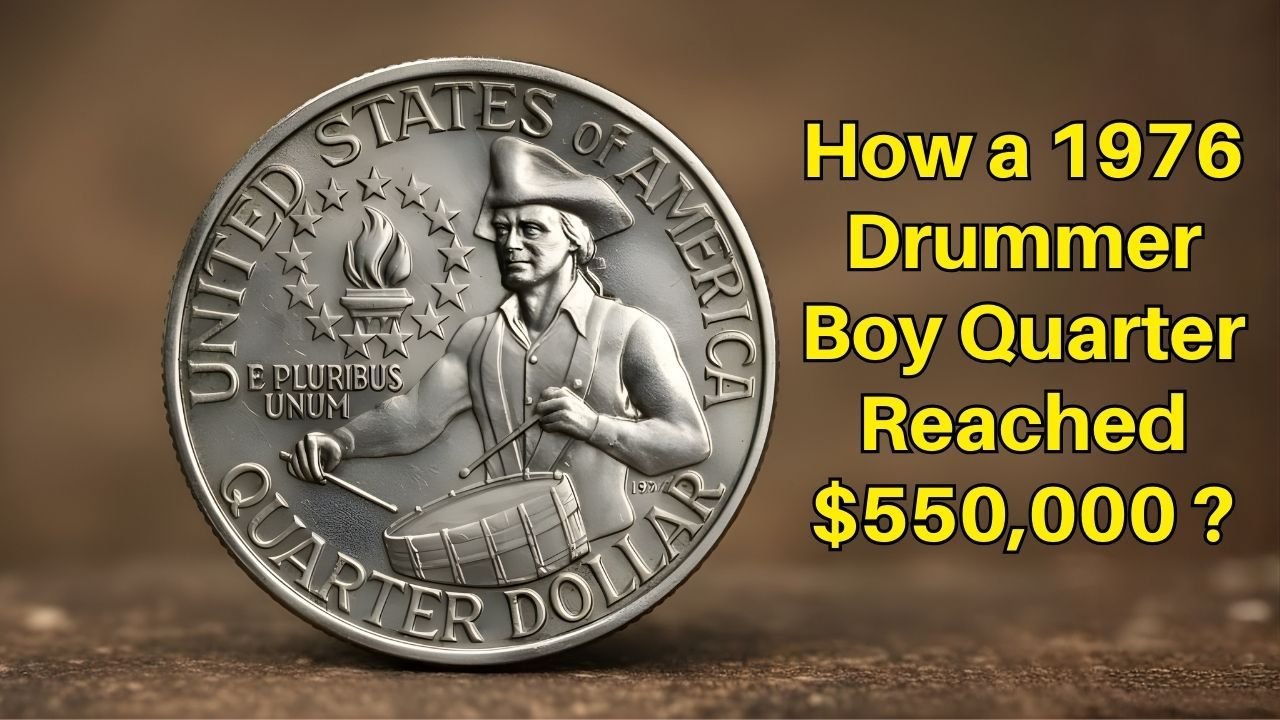
The 1976 Bicentennial Quarter, widely known as the “Drummer Boy Quarter,” is one of the most iconic coins ever produced by the United States Mint. Created to celebrate 200 years of American independence, it represents a rare moment when everyday currency was transformed into a national symbol. While millions of these quarters were minted and remain common today, a small number of exceptional examples have achieved astonishing values, including one that reportedly reached nearly $550,000.
This dramatic valuation has made the Bicentennial Quarter a subject of intense interest among collectors. Understanding how such a widely circulated coin could reach such heights requires a closer look at its history, design, rare variations, and the collector market that surrounds it.
The Historical Significance of the Bicentennial Quarter
The Bicentennial Quarter was issued as part of a broader commemorative coin program authorized by Congress in the early 1970s. The goal was to mark the 200th anniversary of the Declaration of Independence with special designs on the quarter, half dollar, and dollar coins.
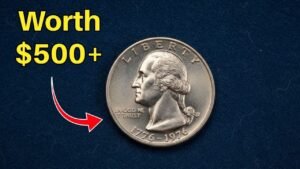
Rather than changing the obverse portrait of George Washington, the Mint introduced a unique reverse design. This decision preserved continuity while allowing the coin to stand apart from standard issues. Released between 1975 and 1976, all Bicentennial Quarters carry the dual date “1776–1976,” making them instantly recognizable.
The Drummer Boy Design and Its Symbolism
A Design Chosen by the Public
The reverse design of the Bicentennial Quarter features a colonial drummer, commonly referred to as the “Drummer Boy,” created by artist Jack L. Ahr. The image symbolizes the spirit of the American Revolution, representing unity, resolve, and the role of ordinary citizens in shaping the nation’s future.
Behind the drummer is a victory torch encircled by thirteen stars, honoring the original colonies. This bold departure from the traditional eagle reverse gave the coin lasting visual and historical appeal, contributing to its popularity among both collectors and the general public.
Types and Compositions of the 1976 Quarter
The Bicentennial Quarter was produced in several forms, each affecting its long-term value.
Copper-Nickel Clad Circulation Coins
Most Bicentennial Quarters were struck in copper-nickel clad composition for everyday use. These coins were minted in very large numbers at Philadelphia and Denver and remain common today.
40 Percent Silver Collector Issues
Special collector versions were struck in 40 percent silver at the San Francisco Mint. These were sold in both proof and uncirculated sets and were never intended for general circulation. Their precious metal content and lower mintage immediately set them apart.
Proof Coins and Finish Quality
Proof Bicentennial Quarters, especially those with deep cameo contrast, are among the most visually striking examples. Sharp details, mirrored fields, and frosted devices make high-quality proofs particularly desirable.
Rare Varieties and Minting Errors
While most Bicentennial Quarters are modest in value, rare varieties and errors are what elevate certain coins into the high-value category.
Wrong Planchet Errors
Some of the most valuable examples were struck on incorrect planchets, such as silver or experimental metals not intended for standard production. These errors are exceptionally rare and require professional authentication.
Doubled Dies and Strike Errors
Doubled die varieties, off-center strikes, and other striking anomalies can significantly increase value. When these errors are dramatic and well-preserved, collector demand rises sharply.
Exceptional Condition
Even without errors, coins graded at the very top of the scale are scarce. A Bicentennial Quarter in near-perfect mint state or proof condition can command a premium simply due to survival rates.
How One Quarter Reached Nearly $550,000
The quarter associated with the nearly $550,000 valuation stands out because it combined several critical factors. It was reportedly an ultra-rare error coin, struck on an unusual planchet, preserved in extraordinary condition, and fully authenticated by leading grading services.
In the rare coin market, value is driven by competition among elite collectors. When a coin is unique or nearly unique, bidding can escalate rapidly. This particular Bicentennial Quarter benefited from historical appeal, modern rarity, and intense demand, pushing its price far beyond typical expectations for a 20th-century coin.
Market Value of Bicentennial Quarters in 2026
Common Circulated Examples
Most circulated Bicentennial Quarters remain worth face value. Their abundance ensures steady availability for casual collectors.
Uncirculated and Proof Coins
Uncirculated copper-nickel coins may sell for a few dollars, while silver proof versions often range from $10 to $20 depending on condition and presentation.
Rare Errors and High-Grade Coins
Error coins and top-graded examples can range from hundreds to tens of thousands of dollars. In exceptional cases, such as the legendary $550,000 quarter, values enter an entirely different category.
The Role of Professional Grading
Professional grading is essential for determining the true value of any Bicentennial Quarter with potential rarity. Certification confirms authenticity, identifies errors, and assigns a standardized grade that collectors trust.
Coins with verified errors and high grades are far easier to sell and often achieve significantly higher prices at auction. Without grading, even a rare coin may struggle to attract serious buyers.
Why Collectors Remain Fascinated
The appeal of the 1976 Drummer Boy Quarter goes beyond money. It represents a moment of national reflection and pride, captured in a coin that millions of Americans once carried in their pockets. For collectors, it offers a blend of accessibility and aspiration, common enough to find yet rare enough in special forms to inspire long-term interest.
Final Thoughts on the Drummer Boy Quarter
The story of the 1976 Bicentennial Quarter reaching nearly $550,000 proves that rarity is not defined solely by age. Modern coins can become legendary when history, condition, and circumstance align. While most Bicentennial Quarters will remain modest keepsakes, a select few have secured a place among America’s most valuable coins.
For collectors and enthusiasts, the Drummer Boy Quarter is a reminder that even familiar objects can hold extraordinary stories and, in rare cases, extraordinary value.