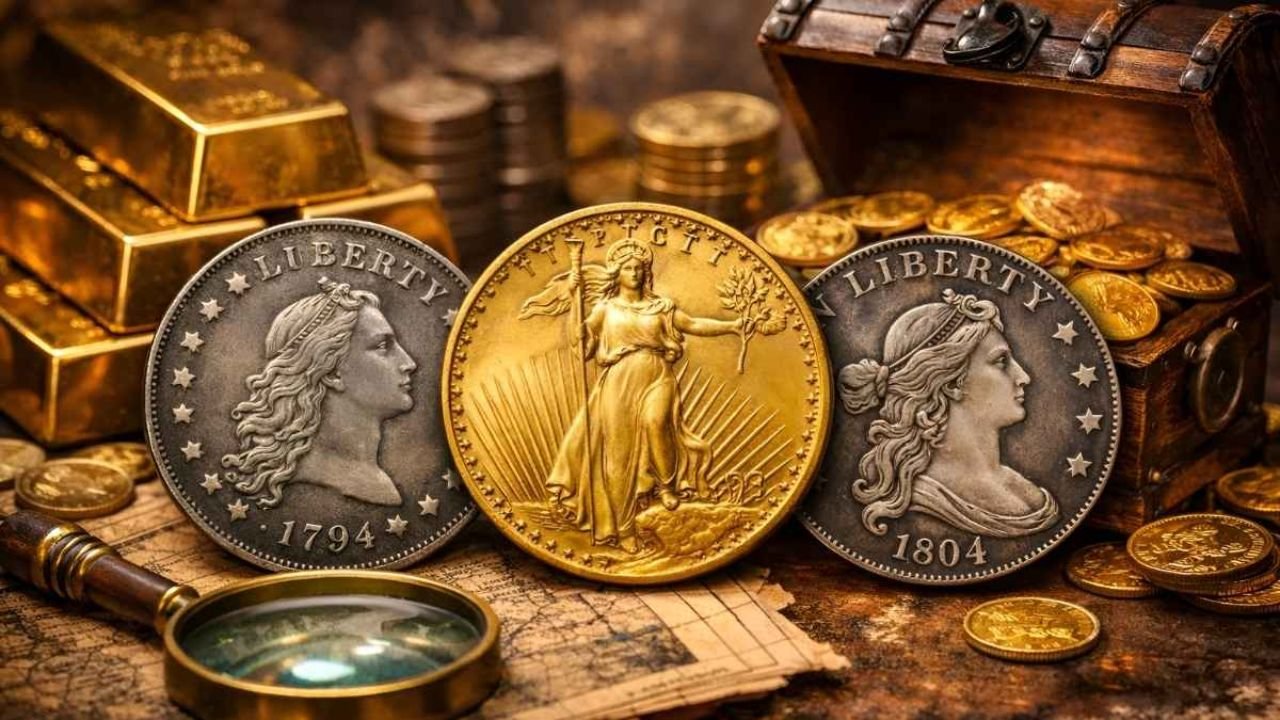
Rare U.S. coins represent the highest tier of collectible assets, blending history, artistry, and extreme scarcity. While most coins remain worth only their face value, a select group has reached legendary status, selling for millions of dollars in private transactions and global auctions. These coins are not only prized for their rarity but also for the powerful stories they tell about America’s economic evolution, minting history, and national identity.
For collectors and high-net-worth investors, understanding which U.S. coins command extraordinary values is essential. This guide explores the most valuable American coins ever known, why they are worth millions, and what makes them timeless treasures.
Why Rare U.S. Coins Command Million-Dollar Prices
The value of a rare coin is driven by a precise combination of factors. Rarity is the foundation, but it is rarely the only reason a coin becomes valuable. Coins with low mintages, undocumented production, or unique minting errors often rise to the top of the market.
Condition plays a crucial role as well. Coins preserved in near-perfect or proof condition command exponentially higher prices than circulated examples. Historical significance, collector demand, and provenance further elevate value, especially when a coin represents a pivotal moment in U.S. monetary history.
The 1794 Flowing Hair Silver Dollar
The 1794 Flowing Hair Silver Dollar is widely regarded as the first silver dollar struck by the United States Mint. Featuring Liberty with flowing hair on the obverse and an eagle on the reverse, it symbolizes the birth of the nation’s monetary system.
Its rarity and historical importance place it among the most valuable coins in the world. High-grade examples have sold for more than $10 million, making it one of the most expensive U.S. coins ever auctioned.
The 1933 Double Eagle
The 1933 Double Eagle is one of the most famous gold coins in existence. Minted as a $20 gold piece, nearly all examples were melted down after the United States abandoned the gold standard. Only a handful survived, many under controversial circumstances.
Legal disputes, government seizures, and private settlements have only increased its mystique. Today, legally owned examples have sold for tens of millions, securing the Double Eagle’s place as a cornerstone of numismatic history.
The 1804 Draped Bust Dollar
Often called the “King of American Coins,” the 1804 Draped Bust Dollar is one of the rarest U.S. coins ever produced. Despite its date, most examples were struck decades later as diplomatic presentation pieces.
Only a small number exist, and their rarity has driven values into the multi-million-dollar range. Collectors prize this coin for its scarcity, elegance, and fascinating origin story.
The 1913 Liberty Head Nickel
The 1913 Liberty Head Nickel is legendary for both its rarity and mystery. Officially, no Liberty Head nickels were authorized that year, yet five examples are known to exist.
Each specimen has a well-documented ownership history, often tied to prominent collectors. When one appears at auction, it commands millions and draws global attention from the numismatic community.
The 1870-S Seated Liberty Dollar
The 1870-S Seated Liberty Dollar is one of the most enigmatic coins in U.S. history. No official mint records confirm its production, yet several authenticated examples exist.
Its mystery, combined with extreme rarity, has driven prices into the million-dollar range. Owning one is considered a once-in-a-lifetime achievement for serious collectors.
The 1943 Copper Wheat Penny
During World War II, the U.S. Mint switched to steel pennies to conserve copper for the war effort. However, a small number of copper planchets from 1942 were accidentally used in 1943.
The result was the legendary 1943 copper Wheat penny. These coins are instantly recognizable and exceptionally rare, with some examples selling for hundreds of thousands and approaching the million-dollar level.
The 1944 Steel Wheat Penny
The opposite error occurred in 1944 when leftover steel planchets were mistakenly struck after the Mint returned to copper. These steel pennies are far rarer than their 1943 counterparts.
Depending on condition, values can reach tens of thousands or more, making them among the most desirable U.S. error coins ever produced.
The 1792 Birch Cent
The 1792 Birch Cent is one of the earliest experimental coins created during the formation of the U.S. Mint. Produced as part of early testing, it represents the foundation of American coinage.
Only a few examples are known today, and their historical significance has pushed values into the multi-million-dollar range.
The 1822 Half Eagle
The 1822 Half Eagle, a $5 gold coin, is one of the rarest regular-issue U.S. coins. Only three authenticated examples exist, with two held in institutional collections.
The lone privately owned specimen has achieved multi-million-dollar valuations, making it one of the most exclusive coins a collector can own.
How to Identify Rare Coins in Your Collection
Collectors searching for valuable coins should focus on careful examination and research. Important steps include checking dates and mint marks, inspecting for errors such as doubling or incorrect metals, and weighing coins to detect wrong planchet strikes.
Using magnification tools and trusted reference materials is essential. Many valuable coins appear ordinary at first glance, making patience and attention to detail critical.
The Importance of Professional Grading
Professional grading services are central to the rare coin market. They authenticate coins, assign condition grades, and confirm error classifications. Certified coins command significantly higher prices and provide confidence for buyers and sellers alike.
For coins valued in the six- or seven-figure range, professional certification is not optional—it is essential.
Market Trends and Long-Term Outlook
The rare coin market has shown long-term resilience and growth. As more coins become locked into private collections, scarcity continues to increase. High-profile auctions regularly set new benchmarks, reinforcing rare coins as both collectibles and alternative investments.
As global interest grows, demand for historically significant U.S. coins is expected to remain strong well into the future.
Conclusion
Rare U.S. coins worth millions represent the pinnacle of numismatic achievement. From early experimental cents to legendary gold and silver issues, these coins embody American history in its purest form. For collectors, they offer more than financial value—they provide a tangible connection to the nation’s past. Whether pursued as passion assets or long-term investments, these extraordinary coins continue to define the highest standards of rarity, prestige, and historical significance.