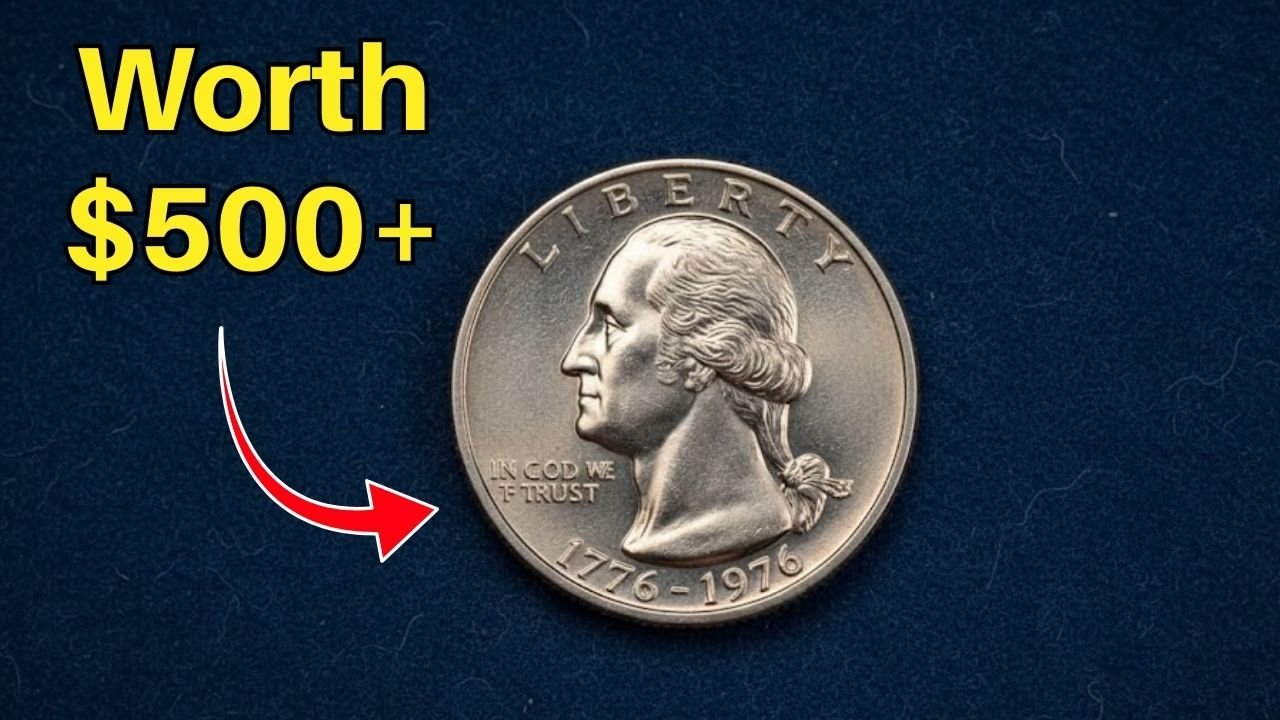
The Bicentennial Quarter stands apart from nearly every other modern U.S. coin. Released during the mid-1970s to commemorate the 200th anniversary of American independence, it transformed everyday currency into a nationwide celebration. Unlike traditional commemorative coins that were often set aside, this quarter circulated widely, embedding history into daily transactions.
Decades later, the Bicentennial Quarter has gained renewed attention from collectors. While millions were produced, certain versions, conditions, and errors have become increasingly valuable. In 2026, select examples are proving that even a familiar 25-cent coin can carry surprising worth.
The Historical Significance of the Bicentennial Quarter
The United States Mint made a bold decision when planning the bicentennial coinage. Rather than limiting the celebration to medals or special collector-only issues, it redesigned circulating coins to ensure broad public participation. The quarter was one of the most visible outcomes of this effort.
A Dual-Date That Made History
The obverse retained George Washington’s portrait but introduced a dual date, “1776–1976,” instantly setting the coin apart. This feature marked two centuries of American independence and ensured that the coin would never be confused with standard issues.
The Colonial Drummer Reverse
The reverse design replaced the traditional eagle with a colonial drummer, a powerful symbol of the American Revolution. Created by artist Jack L. Ahr, the image captured the spirit of unity, sacrifice, and independence. Thirteen stars encircling the design represented the original colonies, reinforcing the historical narrative.
Where Bicentennial Quarters Were Made
Bicentennial Quarters were struck at three U.S. Mint facilities, each contributing to the variety collectors study today.
Philadelphia and Denver Circulation Coins
Philadelphia and Denver produced the majority of Bicentennial Quarters for everyday use. These copper-nickel clad coins entered circulation in massive numbers and were widely used for years. As a result, most surviving examples show wear.
San Francisco Collector Issues
San Francisco focused on collector versions, including proof coins and special 40 percent silver issues. These coins were sold in sets and handled more carefully, leading to higher survival rates in superior condition.
Why Silver Bicentennial Quarters Matter
One of the most important distinctions within the series is metal composition. While standard circulation coins contain no silver, the Mint produced special 40 percent silver Bicentennial Quarters for collectors.
Limited Distribution and Long-Term Appeal
Silver Bicentennial Quarters were never released into circulation. Their limited availability, combined with intrinsic metal value, has supported steady demand. In 2026, these coins benefit from both numismatic interest and broader precious-metal market trends.
Higher Grades, Higher Prices
Many silver examples were preserved in excellent condition. When professionally graded, high-quality silver Bicentennial Quarters can command prices well beyond expectations, especially in proof or near-perfect Mint State condition.
Condition as a Primary Value Driver
Condition is one of the most critical factors determining a Bicentennial Quarter’s value. Because so many circulation coins were heavily used, high-grade examples are far scarcer than raw mintage numbers suggest.
What Collectors Look For
Coins with sharp details on Washington’s hair, strong definition on the drummer, and original mint luster are increasingly difficult to find. Even non-silver quarters can become valuable if preserved at the highest grades.
Scarcity in Perfection
As collectors compete for top-graded coins, prices rise accordingly. In 2026, some exceptionally well-preserved Bicentennial Quarters have crossed the $500 mark, surprising those who still view them as common.
Mint Errors That Create Standout Coins
Errors are among the most exciting aspects of Bicentennial Quarter collecting. These mistakes occurred during production and often went unnoticed until years later.
Popular Error Types
Collectors actively seek examples with doubled lettering, off-center strikes, missing details, or incorrect planchets. Coins struck on the wrong metal are particularly dramatic and immediately recognizable.
Growing Demand for Error Coins
Error coins combine rarity with visual impact. As awareness increases, well-documented Bicentennial Quarter errors have seen strong price growth, especially when certified by professional grading services.
Proof Bicentennial Quarters and Collector Preferences
Proof Bicentennial Quarters were struck using specially prepared dies and polished planchets, resulting in mirror-like surfaces and sharp detail.
Visual Appeal and Preservation
High-quality proof coins display strong contrast between frosted designs and reflective fields. Collectors in 2026 favor examples with clean surfaces and no haze or spotting.
Premiums for Top Grades
Proof Bicentennial Quarters graded at the highest levels can achieve impressive prices. Their limited numbers and aesthetic appeal place them firmly in the premium segment of the market.
How Market Perception Has Changed
For many years, Bicentennial Quarters were dismissed as overly common. That perception has shifted as collectors focus on quality, rarity, and historical context rather than mintage alone.
The Role of Technology
Online auctions, digital price records, and grading databases have increased transparency. Collectors now have better tools to identify truly scarce examples, helping establish stronger and more consistent valuations.
2026 Market Outlook
In 2026, Bicentennial Quarters with clear rarity drivers—silver content, top condition, or notable errors—continue to perform well. Demand reflects a broader trend toward tangible, historically meaningful assets.
How to Examine Your Bicentennial Quarters
Anyone curious about potential value should start with careful examination. Identifying the mint mark, checking weight, and evaluating surface quality are essential steps.
Coins should always be handled by the edges and stored in protective holders. Cleaning should be avoided, as it permanently damages originality and reduces collector appeal.
Why the Bicentennial Quarter Still Holds Value
The Bicentennial Quarter is more than a commemorative coin. It represents a moment when national history entered everyday life. Its enduring popularity shows how cultural significance, combined with rarity and condition, can create lasting value.
In 2026, the Bicentennial Quarter proves that even modern coins can evolve into serious collectibles. Whether discovered in a collection or preserved for decades, this iconic quarter reminds collectors that history and value are often hiding in plain sight.