Rare dimes hold a special place in American numismatics. While most dimes circulate unnoticed and remain worth only ten cents, a select few have achieved legendary status due to rarity, historical importance, or minting errors. These coins can be worth thousands or even millions of dollars, making them highly desirable to serious collectors and investors alike. In 2026, the market for rare dimes remains strong, fueled by global demand and growing interest in tangible, historically significant assets.
This complete guide explores the most valuable rare dimes, their background, and the key factors that determine their worth.
Historical Background of the U.S. Dime
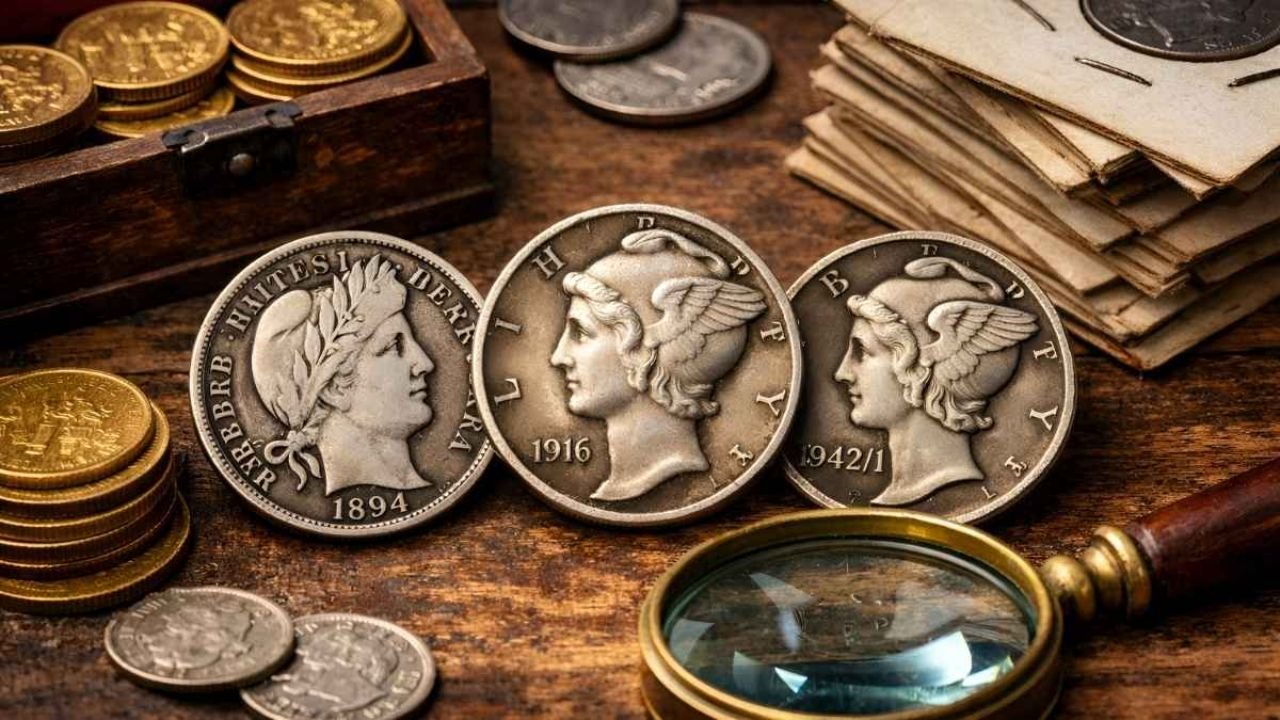
The dime was first introduced in 1796 as part of the early United States coinage system. Over time, it evolved through several iconic designs, including the Draped Bust, Seated Liberty, Barber, Mercury, and Roosevelt dimes. Each design reflects the economic priorities, artistic styles, and historical moments of its era.
Rare dimes often originate from periods of low mintage, design transitions, or unexpected minting errors. These circumstances make certain issues exceptionally scarce and highly prized in today’s collector market.
The 1894-S Barber Dime
The 1894-S Barber Dime is widely considered the crown jewel of American dimes. Only 24 examples were originally struck at the San Francisco Mint, and fewer than ten are known to exist today. The reason for its limited production remains a mystery, adding to its allure.
In 2026, auction prices for the 1894-S Barber Dime range from hundreds of thousands to well over one million dollars, depending on condition. Its combination of extreme rarity and historical intrigue places it among the most valuable U.S. coins ever minted.
The 1916-D Mercury Dime
The 1916-D Mercury Dime is the key date in the popular Mercury dime series. With a mintage of just over 260,000, it is significantly scarcer than other issues from the same year. Collectors value this coin not only for its rarity but also for the elegance of the Mercury design.
High-grade examples can command tens of thousands of dollars in 2026, while even well-circulated specimens remain valuable. This dime is often the centerpiece of advanced Mercury dime collections.
The 1942/41 Overdate Mercury Dime
Minting errors are among the most exciting discoveries in coin collecting, and the 1942/41 overdate Mercury Dime is one of the most famous. This error occurred when a 1941-dated die was mistakenly overpunched with a 1942 date, leaving both years visible.
Collectors prize this variety for its clear error and limited availability. In 2026, high-grade examples can sell for several thousand dollars, with exceptional pieces reaching even higher prices at auction.
The 1968 No-S Proof Roosevelt Dime
Modern dimes can also be incredibly valuable, especially when minting mistakes occur. The 1968 No-S Proof Roosevelt Dime was struck without the San Francisco mint mark, making it an extreme rarity among proof coins.
Only a small number are known to exist, and demand remains strong in 2026. Values typically range in the tens of thousands of dollars, depending on condition and eye appeal.
The 1975 No-S Proof Roosevelt Dime
Similar to the 1968 variety, the 1975 No-S Proof Roosevelt Dime was mistakenly produced without a mint mark. This error went unnoticed until years later, by which time only a few examples were known.
In 2026, this dime remains one of the most valuable modern U.S. coins. Auction prices frequently reach impressive levels, reflecting its rarity and strong collector demand.
The 1982 No-Mint Mark Roosevelt Dime
In 1982, the Philadelphia Mint began using a “P” mint mark on dimes. However, a small number were released without it. Unlike proof errors, these coins entered general circulation, giving everyday collectors a rare chance at discovery.
Today, the 1982 no-mint mark dime is highly collectible. Values in 2026 typically range from a few hundred dollars to several thousand, depending on condition and strike quality.
Collector’s Value Chart for Rare Dimes in 2026
Estimated market ranges for notable rare dimes in 2026 include:
- 1894-S Barber Dime: $500,000 to $2,000,000
- 1916-D Mercury Dime: $1,000 to $25,000
- 1942/41 Overdate Mercury Dime: $2,000 to $15,000
- 1968 No-S Proof Roosevelt Dime: $15,000 to $30,000
- 1975 No-S Proof Roosevelt Dime: $20,000 to $40,000
- 1982 No-Mint Mark Roosevelt Dime: $200 to $2,000
Actual prices vary based on grade, certification, and market demand.
Factors That Influence Rare Dime Values
Several factors determine how much a rare dime is worth. Rarity is the most important, followed closely by condition. Coins in mint state or pristine proof condition command substantial premiums.
Historical significance, collector demand, and originality also play a role. Coins with strong eye appeal and verified authenticity consistently outperform altered or damaged examples.
Collecting and Investment Strategy
Collectors seeking rare dimes should prioritize quality over quantity. Certified coins from reputable grading services provide confidence and long-term value stability. Proof sets, especially from San Francisco, are an excellent entry point for modern rarities.
From an investment perspective, rare dimes offer diversification and long-term appreciation potential. In 2026, demand for error coins and key-date issues remains strong, making high-quality examples attractive assets for both collectors and investors.
Preservation and Authentication
Proper storage is essential to protect value. Rare dimes should be kept in protective holders, away from moisture, heat, and direct handling. Professional grading and authentication are critical, especially for high-value coins, as counterfeits and altered pieces remain a concern.
Conclusion
Rare dimes represent the perfect blend of history, artistry, and financial potential. From the legendary 1894-S Barber Dime to modern proof errors like the 1975 No-S Roosevelt Dime, these coins continue to captivate collectors worldwide. In 2026, understanding rarity, condition, and market trends is key to building a valuable and rewarding dime collection.